


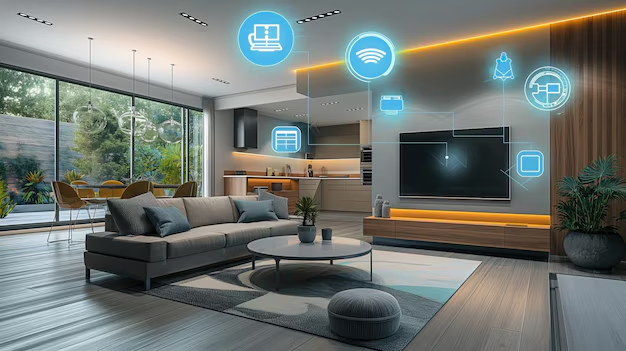
If Smart Home 1.0 was about remote control and Smart Home 2.0 was about voice commands, then Smart Home 3.0 is all about intelligent coordination.
We’re entering a new era of connected living, where AI, interoperability standards like Matter, and adaptive automation are turning ordinary homes into ecosystems that anticipate your needs before you even speak.
And the best part? It’s already happening powered by products from Amazon, Google, Apple, Samsung, and Xiaomi that are smarter, faster, and finally compatible with each other.
What Exactly Is Smart Home 3.0?
Think of Smart Home 3.0 as the evolution from control to consciousness. Your devices no longer need manual inputs or even voice commands, they learn from your patterns, communicate with each other, and make decisions automatically.
Imagine this:
- Your lights dim automatically when your TV starts Netflix.
- Your thermostat adjusts based on real-time weather.
- Your smart speaker reminds you to water plants because your irrigation system detected dryness.
That’s Smart Home 3.0, a synchronized, self-learning system powered by AI, IoT, and automation intelligence.
Trending Smart Home Products Defining 2025
1. Amazon Echo Hub
A touchscreen-based central control panel that unifies your smart devices into one intuitive interface.
It supports Matter and Thread, meaning it can talk to devices from Google, Philips, or Samsung seamlessly. You can set up “smart routines” like dimming lights, playing ambient music, and locking doors when you say, “Goodnight.”
Why It Matters:
The Echo Hub turns the scattered smart home setup into one connected ecosystem, making automation accessible to everyone.

2. Google Nest Learning Thermostat (Gen 4)
Google’s latest thermostat goes beyond temperature control. It now uses AI to predict energy consumption, adjust based on local weather forecasts, and even integrate with solar panel systems to optimize energy efficiency.
Smart Home 3.0 Angle:
The Nest Thermostat doesn’t just react, it learns your preferences and automates savings.

3. Samsung SmartThings Station
Samsung is turning its SmartThings platform into a true smart home hub with Matter support and deep integration with Galaxy AI.
From controlling appliances to tracking your sleep or automatically silencing your phone during rest hours — this hub coordinates every aspect of your living environment.
Trending Use Case:
SmartThings now syncs with Samsung TVs and washing machines, letting users automate energy use and manage devices from one dashboard.

4. Mi Robot Vacuum 3C
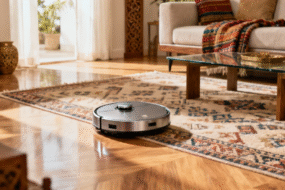
In India and Southeast Asia, Xiaomi’s Mi Robot Vacuum 3C is becoming the go-to AI cleaner. It uses LIDAR navigation, AI mapping, and voice control via Alexa or Google Assistant.
It can remember multi-floor maps and auto-adjust suction based on dirt levels.
Why It’s Trending:
Affordable automation that brings Smart Home 3.0 to the mass market — efficiency meets accessibility.

5. Philips Hue Sync Box + Gradient Lights
Smart lighting is evolving from mood-based control to adaptive ambience.
The Hue Sync Box syncs lighting with your TV or music, while AI routines now adjust color temperature automatically through the day to match circadian rhythms.
The 3.0 Upgrade:
It’s not about static lighting anymore; it’s about dynamic, health-oriented illumination.

AI: The True Backbone of Smart Home 3.0
At the heart of Smart Home 3.0 lies Artificial Intelligence — not just voice AI, but predictive learning systems.
For instance:
- Google Home AI recognizes your daily habits and suggests routines.
- Amazon Alexa LLM understands tone and context (e.g., “It’s chilly” means increase temperature).
- Samsung SmartThings AI uses data from connected devices to optimize energy and appliance usage.
This shift from command-based automation to proactive intelligence is what defines Smart Home 3.0.
Interoperability: The Rise of the Matter Standard
Previously, building a smart home meant juggling between incompatible devices — Alexa for bulbs, Google for thermostats, Apple for cameras. Not anymore.
With the Matter standard, launched jointly by Amazon, Apple, Google, and Samsung, devices now talk to each other effortlessly, regardless of brand.
Example:
Your Google Nest Hub can now control Philips Hue lights and Echo-connected plugs.
The result? A truly unified, cross-brand ecosystem.
SEO Trend: Matter-based products are dominating 2025 smart home searches — it’s a must-cover keyword in every home automation guide.
Voice + Vision: The Multimodal Future
In Smart Home 3.0, voice and vision combine for natural interactions.
Devices like the Echo Show 15 and Google Nest Hub Max can now use cameras to recognize faces and adjust settings based on who’s home.
Meanwhile, new AI security cameras can tell the difference between a delivery package and an intruder, triggering different actions automatically.
Upcoming Innovation:
Apple’s rumored HomePod with a built-in display and FaceID could take this even further, enabling gesture-based smart home control.
Sustainability: The Smart Home Goes Green
Another defining pillar of Smart Home 3.0 is sustainability.
Devices now use AI to minimize waste — whether that’s through optimizing heating, managing water use, or suggesting energy-efficient habits.
For example:
- Nest Renew integrates solar insights for cleaner energy use.
- Samsung SmartThings Energy tracks real-time power consumption and sends energy reports.
- IKEA Dirigera Hub promotes affordable, sustainable smart lighting systems.
Trend Note:
In 2025, energy-efficient automation is the fastest-growing segment in home tech.
What’s Next for Smart Home 3.0
The next step is multimodal AI assistants — systems that understand voice, gestures, routines, and environment simultaneously.
Picture this:
You come home, and without saying a word, the system recognizes your face, unlocks the door, adjusts lighting, and starts playing your evening playlist.
That’s Smart Home 4.0 on the horizon — an anticipatory, self-operating home.
Final Thoughts
Smart Home 3.0 isn’t just about convenience — it’s about cohesive intelligence, sustainability, and personalization.
As ecosystems like Amazon Alexa, Google Home, Samsung SmartThings, and Apple HomeKit embrace AI and interoperability, the dream of a truly connected lifestyle is now a reality.
Whether you’re a first-time adopter or upgrading your setup, invest in devices that are Matter-compatible, AI-enabled, and energy-smart — because the homes of tomorrow are already learning today.











No Comments